 Battle Royale
Fortnite
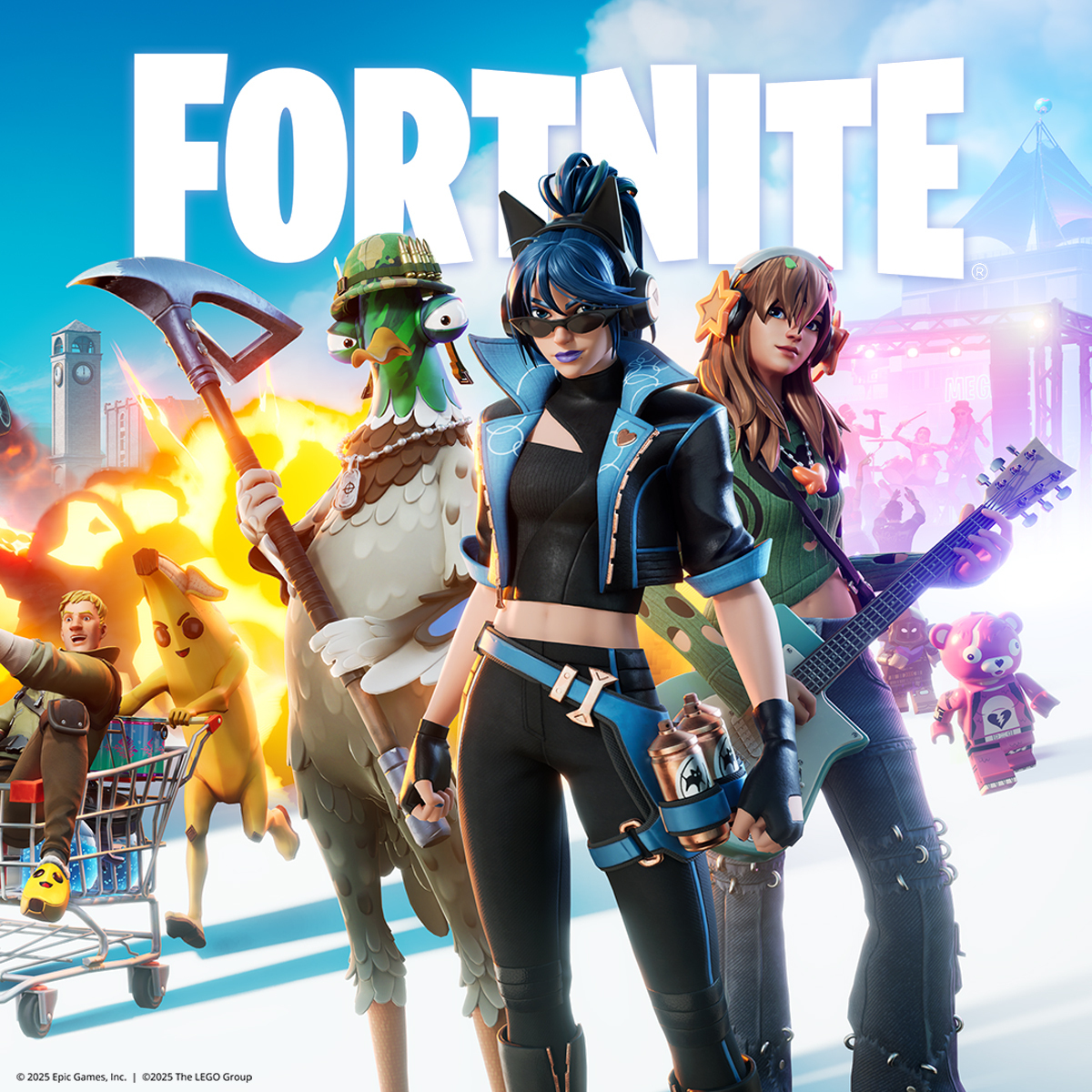
Fortnite is Epic Games' free-to-play battle royale phenomenon, launched in its now-iconic 100-player last-one-standing form in September 2017 as a spinoff of the studio's original cooperative survival game, Fortnite: Save the World. While that original PvE mode still exists, it was the battle royale mode — added quickly to capitalize on the sudden popularity of the genre pioneered by PUBG — that turned Fortnite into a cultural phenomenon spanning gaming, music, film, and fashion, and made Epic Games one of the most powerful companies in the industry. The core battle royale loop drops 100 players onto a large island with no weapons, forcing them to loot buildings and the environment for guns, resources, and healing items while an ever-shrinking storm circle forces the surviving players into increasingly tight confrontations. What set Fortnite apart from other battle royale games from the very beginning is its building mechanic: players can harvest wood, stone, and metal from almost anything in the environment and instantly construct walls, ramps, floors, and towers, turning every firefight into a real-time architecture contest as skilled players build elaborate structures for cover, high ground, and rotation. This system created an entirely new skill ceiling that separates Fortnite from every other shooter on the market and remains its signature mechanic even as the game has periodically experimented with build-free "Zero Build" modes for players who prefer a more traditional shooting experience. Epic has structured Fortnite's ongoing life around discrete "Chapters" and numbered "Seasons," each of which substantially reworks the map, introduces new points of interest, and often layers in a season-long narrative delivered through live in-game events — concerts, boss fights, and map-altering cataclysms that happen at scheduled times and draw in millions of simultaneous viewers, blurring the line between video game and live entertainment. These live events have featured collaborations with musicians like Travis Scott and Ariana Grande performing full virtual concerts inside the game, as well as licensed crossover content bringing in characters from Marvel, Star Wars, DC, anime franchises, and countless other pop culture properties as playable skins, turning the in-game item shop into one of gaming's most valuable ongoing merchandising platforms. Fortnite has also become a platform in its own right through Creative mode, which gives players a full set of tools to build entirely custom game modes, maps, and experiences within the Fortnite engine — some of these player-made experiences, like deathrun courses, zombie survival maps, and elaborate roleplay servers, have drawn player counts rivaling entire standalone games, and Epic has increasingly promoted Unreal Editor for Fortnite (UEFN) as a serious tool for aspiring game developers to build and monetize their own creations within the Fortnite ecosystem. Technically, Fortnite runs on Unreal Engine — Epic's own engine, also licensed to countless other studios across the industry — and has scaled its visual fidelity substantially since 2017, introducing Unreal Engine 5 features like Nanite and Lumen for dramatically improved lighting and geometric detail on high-end hardware, while maintaining a Performance Mode specifically tuned to run acceptably on much older integrated graphics. This wide performance range, combined with the fact that Fortnite is cross-platform between PC, consoles, and mobile with full cross-play, has helped it remain one of the most consistently played games in the world for close to a decade, a rare feat for any live-service title in an industry known for short attention spans.
Calculer le FPS pour ce jeu